Northwest Oakland County
Clarkston
Wooded lots, mature trees, lake-area moisture, wind exposure and older shingle systems can create a different mix of repair and replacement decisions around Clarkston and Independence Township.

Oakland County is large enough that a roofing problem in one community can look very different from the next. The county includes 62 cities, villages and townships spread across more than 900 square miles. That means a homeowner in a wooded Clarkston neighborhood, a lake-area property near Orion or White Lake, an established Rochester Hills subdivision, and an architecturally detailed Bloomfield home may all be dealing with different roof shapes, drainage patterns, tree exposure, ventilation needs and expectations for appearance.
Valor Roofing approaches those differences at the house level. A roof inspection should answer practical questions: Is the damage isolated or spread across multiple slopes? Is the leak coming from shingles, flashing, a penetration, a valley or ventilation-related moisture? Is the roof old enough that repeated repairs no longer make financial sense? Did a recent wind or hail event create visible damage that needs documentation? Does the replacement plan protect the home while also fitting the architecture and curb appeal of the property?
This Oakland County page brings those questions together in one place, then connects homeowners to deeper roofing information for specific communities and services. If you already know the issue, you can go directly to roof replacement, roof repair, storm damage and insurance guidance, or shingle roofing. If you are not sure what the roof needs yet, start with an inspection.

Wooded lots, mature trees, lake-area moisture, wind exposure and older shingle systems can create a different mix of repair and replacement decisions around Clarkston and Independence Township.
Rochester Hills combines established subdivisions, complex rooflines and strong curb-appeal expectations with the same Michigan wind, snow, rain and freeze-thaw stress seen across the county.
Architectural appearance, flashing detail, valleys, dormers, landscaping protection and material selection can matter just as much as the basic question of whether the roof needs repair or replacement.
A useful roofing plan starts by matching the work to the roof’s condition. That keeps a small repair from being turned into an unnecessary replacement and keeps a failing system from being patched long after replacement has become the more sensible option.
Full tear-off and replacement planning for roofs with widespread aging, recurring leaks, brittle shingles, broad storm damage or system-level problems. A replacement plan can include decking review, underlayment, flashing, ventilation and the final shingle system rather than treating the roof as shingles alone.
Targeted help for localized leaks, missing or lifted shingles, damaged flashing, vent and pipe-boot problems, isolated storm damage and other issues where the surrounding roof still has useful service life.
Wind and hail can damage shingles and roof components without creating an immediate indoor leak. An inspection can document visible conditions so the homeowner can understand the roof before making repair, replacement or insurance decisions.
Storm damage guidance →
Storm Damage Roof Insurance Help in Clarkston →
Architectural shingles remain a common residential choice because they balance appearance, weather performance, material options and overall project cost. The right system also depends on ventilation, underlayment and correct installation details.
Chimneys, valleys, wall intersections, skylights, plumbing penetrations and roof-to-roof transitions are frequent leak points. Water entry has to be traced to the source instead of merely sealing the first visible symptom.
Attic heat and moisture affect the entire roof system. Intake and exhaust ventilation should work together so the roof can manage seasonal temperature swings without trapping excess heat or moisture below the decking.
Recent Southeast Michigan severe-weather events have included damaging wind, hail, heavy rain and winter ice. The roof system has to handle those events as well as the slower wear created by years of seasonal cycling.
Strong gusts can break shingle seals, lift tabs, loosen edge materials and expose vulnerable areas around ridges and transitions. A roof may still look mostly intact from the ground while individual slopes carry damage.
Hail and wind-driven debris can bruise shingles, knock away granules and damage soft metal components. Tree limbs create another concern in heavily wooded parts of Oakland County.
Snow accumulation, ice dams and repeated melting and refreezing can expose weaknesses at eaves, valleys, flashing and attic ventilation. Winter problems often begin with a system detail rather than a dramatic shingle failure.
Roof materials, sealants and flashing repeatedly expand and contract as temperatures swing. Aging materials become less forgiving, especially where previous repairs or penetrations have already created weak points.
Useful homeowner weather resources: The National Weather Service Detroit/Pontiac office tracks severe weather across Southeast Michigan. For insurance-related storm information, Michigan homeowners can also review the Michigan Department of Insurance and Financial Services severe-storm guidance.
A large county creates a mix of rooflines and homeowner priorities. Around Clarkston, Lake Orion and White Lake, mature tree cover can mean leaves and debris collecting in valleys, branches rubbing or falling onto roof surfaces, shaded areas holding moisture longer, and gutters needing more attention. Around Rochester Hills and Troy, established subdivisions may have clusters of homes built during similar periods, meaning multiple roofs in the same neighborhood can reach replacement age within the same few years.
Bloomfield, Bloomfield Hills, Birmingham and West Bloomfield often include larger or more architecturally detailed homes where the roof may have multiple valleys, dormers, chimneys, skylights and transitions. Those details increase the importance of flashing, water management and careful material selection. The final roof also has to look right on the home. A perfectly functional roof can still disappoint a homeowner if the shingle profile, color or installation details fight the architecture.
Other parts of Oakland County include more modest ranches, two-story colonials, newer planned communities, lake cottages and homes that have been expanded several times. Additions can create roof-to-wall intersections and mixed roof ages that deserve close inspection. The practical question is not which town has the “best” roofing system. It is whether the roof design, materials and installation plan match the specific house and the conditions it faces.
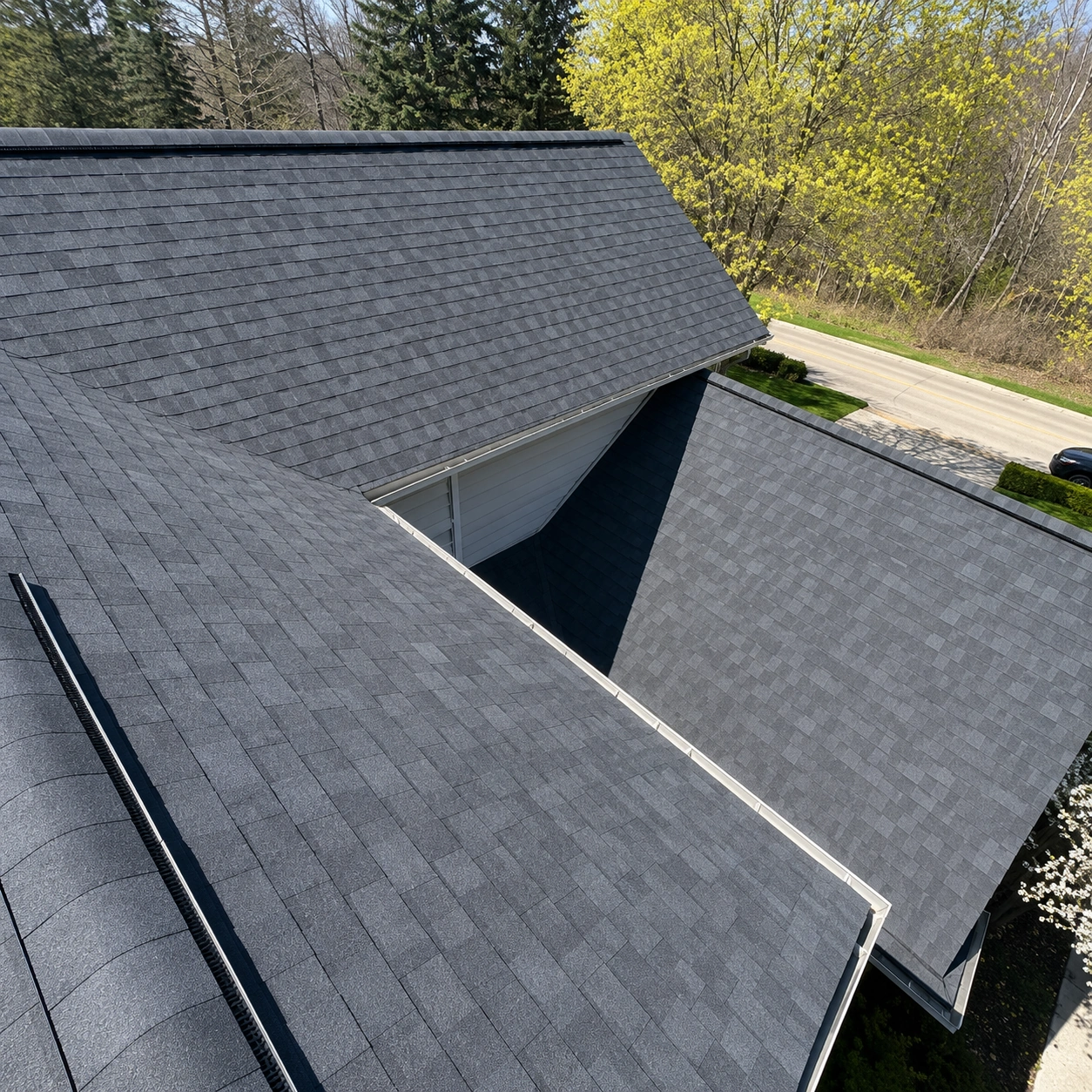
A leak does not automatically mean the roof needs to be replaced, and a patch is not automatically the cheapest choice over the next several years.
An inspection is meant to narrow the decision. The right recommendation depends on the actual roof condition, not a fixed rule based on one symptom or a single age number.
Shingles matter, but they are only one visible part of the roof. A useful inspection looks for the places where water, weather and installation details most often create trouble.
Missing, lifted, creased, cracked, brittle or heavily worn shingles can show wind exposure, aging and loss of weather protection.
Chimneys, plumbing vents, skylights, sidewalls, valleys and roof transitions need intact flashing and sealing details.
Visible sagging, soft spots or moisture signs can point to problems below the shingle surface that affect replacement scope.
Intake and exhaust airflow influence heat, moisture and winter ice conditions. Ventilation needs to be considered as part of the roofing system.
Wind, hail and debris can leave patterns across roof slopes and soft metal components. Documentation helps the homeowner understand what is visible.
An interior stain may not sit directly below the exterior source. Water can travel along decking, rafters and other materials before it becomes visible indoors.
Roofing prices are affected by much more than the square footage of the house. The roof surface area, pitch, number of stories, accessibility, tear-off requirements, disposal, material tier, number of valleys and penetrations, flashing work, ventilation changes and the condition of the wood decking can all change the final scope. A complex roof on a larger Bloomfield home may require far more labor and detail work than a simple ranch with similar living-space square footage.
Material choices create another layer. Standard architectural shingles, upgraded designer profiles, impact-resistant products and metal systems do not carry the same material or installation costs. Even within asphalt shingles, warranty structure, accessory requirements and color or profile selections can vary by manufacturer and product line.
The most useful way to compare estimates is to compare the scope. Ask what happens to old materials, what underlayment is included, how flashing will be handled, whether the decking is inspected after tear-off, how ventilation is evaluated, what cleanup is included and what is covered by the workmanship commitment. A lower number is not automatically a better value if important parts of the roof system have simply been left out of the scope.
Michigan homeowners can review contractor licensing information through the Michigan Department of Licensing and Regulatory Affairs.
Age matters, but condition matters more. Two roofs installed in the same year can age very differently because of ventilation, shade, storm exposure, roof pitch, workmanship and maintenance.
A roof in full sun may age differently from a shaded roof under mature trees. Tree cover can keep areas damp longer and add debris, while open exposure can increase wind stress. Repeated storms can also accelerate wear that is not explained by calendar age alone.
Flashing, nail placement, underlayment, starter materials, ridge details and ventilation all affect long-term performance. A roof made from good shingles can still develop problems early when the supporting installation details are weak.
Missing shingles, damaged sealant, clogged valleys, flashing movement and small leaks are easier to address before moisture reaches decking, insulation or interior finishes. Periodic visual checks after major storms can help catch changes sooner.
For homeowners planning ahead, the useful question is not simply “How old is my roof?” It is “What condition is the roof in, what has changed recently, and what is the likely next major expense?” An inspection can help a homeowner budget for replacement before an emergency, compare repair options while there is still flexibility, or confirm that an older roof remains serviceable and does not need immediate replacement.
Shingle selection should fit the roof design, appearance goals, weather exposure, budget and warranty priorities of the homeowner.
Owens Corning offers residential shingle systems, underlayments, ventilation components and accessory products. Homeowners comparing systems can review wind ratings, color options, warranty terms and the manufacturer’s required components for specific coverage.
GAF offers multiple asphalt shingle lines and roofing accessories. Product comparisons can include shingle profile, appearance, wind performance, warranty options and the accessory package specified for the roof.
CertainTeed offers architectural and designer shingle options across a range of appearances and performance features. The best choice depends on the house and the complete installed system, not the logo on the bundle.
A storm does not automatically mean a claim is the right next step. Homeowners need to know what was damaged, how serious it appears and what their own policy says.
After wind, hail or falling debris, a roof inspection can document missing shingles, lifted or creased tabs, impact marks, damaged flashing and other visible conditions. Photos give the homeowner something concrete to review rather than relying on a sales pitch or trying to judge the roof from the driveway.
Insurance coverage is determined by the policy and the insurance carrier. Valor Roofing can explain visible roofing conditions and provide roofing documentation, but the carrier decides whether a loss is covered and what portion of the work qualifies. Michigan DIFS specifically advises consumers to understand their policy and notes that storm-related roof coverage depends on the covered loss and the damaged portion of the roof.
If temporary protection is needed to prevent additional water entry, document the condition before and after temporary work and keep receipts. Permanent work should be coordinated with the insurer when a claim is involved so the homeowner does not accidentally create a documentation problem.
Wooded neighborhoods, mature trees, older roof systems and lake-area conditions make moisture management, debris, wind exposure and careful leak diagnosis especially important.
Established neighborhoods, subdivisions and varied rooflines create a mix of aging-roof, storm, flashing and ventilation concerns throughout the Rochester area.
Larger homes and more complex architecture can increase the importance of valleys, flashing, material appearance, clean installation and property protection during replacement.
Lake-area homes and wooded neighborhoods can see tree debris, moisture, wind exposure and rooflines that need careful drainage and flashing attention.
A broad range of home ages and roof types means the right plan may be a small leak repair on one property and a full tear-off on the next.
From established subdivisions to newer development, homeowners need clear inspection findings, a defined scope and roofing details designed for Southeast Michigan weather.
Oakland County contains dozens of separate cities, villages and townships, and building permit requirements can vary by municipality. A homeowner in Troy, Clarkston, Rochester Hills or Bloomfield Township should not assume the same permit office, fee or local process applies everywhere.
Before a roof replacement begins, confirm which local building department has jurisdiction for the property and what the current permit requirements are. Requirements can change, and additions, structural repair or specialty roofing conditions may create different review needs.
For a directory of county communities, homeowners can use Oakland County’s local communities resource. Michigan contractor licensing information is available through LARA’s license verification tools.
Roofing marketing is full of superlatives. Homeowners are better served by checking concrete information: licensing, insurance, written scope, project photos, reviews, communication, cleanup standards and whether the contractor can explain why a specific repair or replacement is being recommended.
A strong estimate should make it easier to compare contractors, not harder. If one proposal includes flashing replacement, ventilation work and decking allowances while another is just a single total, the prices are not yet comparable. Ask enough questions to understand what each contractor is actually promising to install.
Local work also matters. A company that regularly works throughout Oakland County is more likely to understand the mix of housing, local permit offices, weather exposure and homeowner expectations found across the county. Valor Roofing’s project gallery gives homeowners another place to review real roofing work before scheduling an inspection.
The homeowner should understand what is happening before materials arrive in the driveway.
Review visible roof condition, leaks, flashing, penetrations, ventilation and storm-related concerns.
Show the findings and explain the practical repair, replacement or monitoring options.
Define materials, tear-off, flashing, ventilation, decking allowances, permit needs and property protection.
Complete the repair or replacement with organized installation and communication through the project.
Clean the property, confirm the finished work and provide the homeowner with final project information.
The goal is not to make every roof sound catastrophic. It is to help the homeowner understand the condition, the options and the scope before spending money.
Some roofs need a focused repair. Others are aging out or carrying broad damage. A clear inspection helps separate those situations before the project turns into a sales conversation.
Visible findings help homeowners understand storm damage, leaks, shingle wear and repair-versus-replacement decisions without relying on vague descriptions.
Driveways, landscaping, siding, outdoor living areas and neighboring property deserve protection while roofing work is underway. Cleanup is part of the finished job.
Wind, rain, snow, ice, temperature swings and tree exposure all influence roof performance. Materials and installation details need to account for that environment.
Shingle appearance matters, but underlayment, flashing, ventilation, accessory components and workmanship are what turn materials into a complete roofing system.
Homeowners in Clarkston, Rochester Hills and Bloomfield can move from this county overview into dedicated local pages with more community-specific roofing information.
Roofing pages can make claims all day. Actual project photos are more useful. They show the type of homes a contractor works on, the finished appearance of installed roofs and whether the company has a real footprint in the communities it says it serves.
Valor Roofing’s gallery includes roofing work from Oakland County communities and surrounding Southeast Michigan. Homeowners comparing contractors can use those projects alongside reviews, licensing, insurance information and the written estimate to make a more informed decision.
Yes. Valor Roofing serves homeowners across Oakland County, including Clarkston, Rochester Hills, Bloomfield and Bloomfield Hills, Lake Orion, Waterford, White Lake, Troy, Auburn Hills and surrounding communities for roof replacement, roof repair, storm damage inspections and asphalt shingle roofing.
Localized damage on an otherwise serviceable roof may be repairable. Replacement becomes more likely when wear is widespread, leaks keep returning, shingles are brittle or heavily deteriorated, storm damage affects broad areas, or decking and ventilation issues require larger corrective work. A roof inspection is the best way to compare the two options.
Common issues include wind damage, hail and debris impact, missing or lifted shingles, leaks around flashing and penetrations, aging asphalt shingles, tree debris in valleys and gutters, poor attic ventilation, winter ice concerns and repeated freeze-thaw wear.
Yes. Valor Roofing can inspect visible roofing conditions after severe weather and document concerns such as missing or lifted shingles, impact marks, flashing damage, tree-related damage and leak risks. Insurance coverage decisions are made by the homeowner’s carrier according to the policy.
No. Oakland County includes many separate cities, villages and townships, and local building departments can have different permit processes and requirements. The correct municipality should be confirmed for the property before work begins.
Roof surface area, pitch, height, access, roofline complexity, tear-off requirements, decking condition, flashing, ventilation changes, material selection, disposal and local permit requirements can all affect the final project cost. Comparing the written scope is as important as comparing the total price.
Architectural asphalt shingles are common on residential homes because they provide a practical mix of appearance, weather performance and cost. Some homeowners also compare upgraded designer shingles, impact-resistant products or metal systems depending on the home and budget.
Ventilation helps manage attic heat and moisture. Poor airflow can contribute to condensation, high attic temperatures and winter ice conditions, and it can shorten the useful life of roofing components. Intake and exhaust ventilation should be evaluated as a system.
Often, yes. If the leak source is isolated and the surrounding roof still has useful life, a targeted repair may solve the problem. The repair needs to address the actual water entry point, which may be flashing, a penetration, a valley or a damaged shingle area rather than the location where the stain appears indoors.
Compare tear-off details, underlayment, flashing work, ventilation, decking allowances, shingle and accessory products, permit responsibilities, property protection, cleanup, workmanship coverage and how changes are handled. Two estimates with different scopes are not a true price comparison.
Yes. Homeowners can use Valor Roofing’s dedicated pages for Clarkston, Rochester Hills, and Bloomfield and Bloomfield Hills, along with the broader service areas page.
Call Valor Roofing at 877-825-6789 or use the website contact form to request a roof inspection. Include the property location and whether you are dealing with a leak, aging shingles, storm damage or a planned replacement so the team has useful context before the visit.
Start with the roof condition. Valor Roofing can help you understand whether the next step is a repair, a replacement, storm documentation or simply a closer inspection before you make a larger decision.